 Finder Spreadsheet
Order status terms, from payment to the warehouse shelf
An order status describes a stage, not every reason for a delay. Match it to the item’s messages, payment record and relevant deadline before deciding whether to wait, pay a supplement or request a change.
The six states and where your goods are
On a small screen, scroll to read every column.
| Official status | Chinese equivalent | What it means, physically |
|---|---|---|
| Pending payment | 待付款 | An order line exists; no money has moved. Check which edits are available before paying; a saved request is not proof that the seller has stock. |
| Paid | 已付款 | Payment is recorded. Read the current order status and any review or supplement message; the older tutorial’s handling times are examples. |
| Purchased | 已采购 | The buying team placed or completed the order with the seller. Presale items camp in this state for however long the seller quoted. |
| Shipped | 卖家已发货 | The seller handed the parcel to a domestic courier. Domestic transit depends on the seller, courier and dispatch date. |
| Has been stored | 已入库 | The warehouse signed for the parcel; inspection and weighing follow, then shelving. The 100-day free storage clock starts at in-storage. |
| Avaliable for shipment | 可提交运输 | Ready for an international shipping order. Yes, the official interface spells it Avaliable; search their help with that spelling and you find more. |
The spelling in the last row is not this site’s typo. The official article and interface both write Avaliable for shipment, and keeping their spelling means you can match the string exactly when you see it.
Where the states live on screen
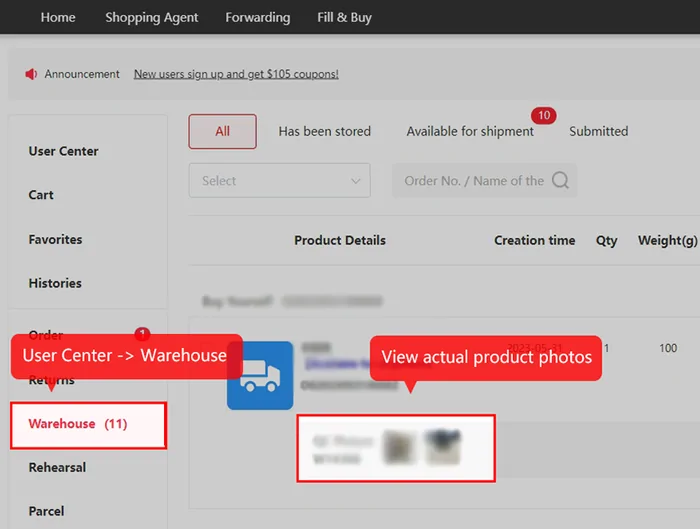
Inside the user centre, the Warehouse view filters your lines by state: all, stored, available for shipment, submitted. Each stored row carries its QC thumbnails; the QC page explains what visual inspection does and does not cover.
The counters next to the tab names are the fastest health check you have. A status alone may not explain a delay. Read the item message, expected presale dispatch date and any restriction or payment notice before asking support.
The two states that start clocks
Paid means the purchase is awaiting or undergoing processing. The older tutorial describes review targets, but the current working schedule depends on the platform and service. Do not assume every weekend order waits until Monday; check the actual message and published buying hours.
The captured normal-goods storage rule uses 100 days from in-storage; abnormal parcels have a separate 60-day period from their signed-for event. Keep the actual status date and account deadline. An unresolved issue is a reason to ask which rule applies, not to guess that the longer period is available.
Between those clocks sits Shipped, the domestic transit state. The older tutorial’s 3–5-day example is not a current guarantee. Its tracking lives on the order line itself; international tracking only exists later, after you submit a parcel.
The warehouse table: columns that decide your freight
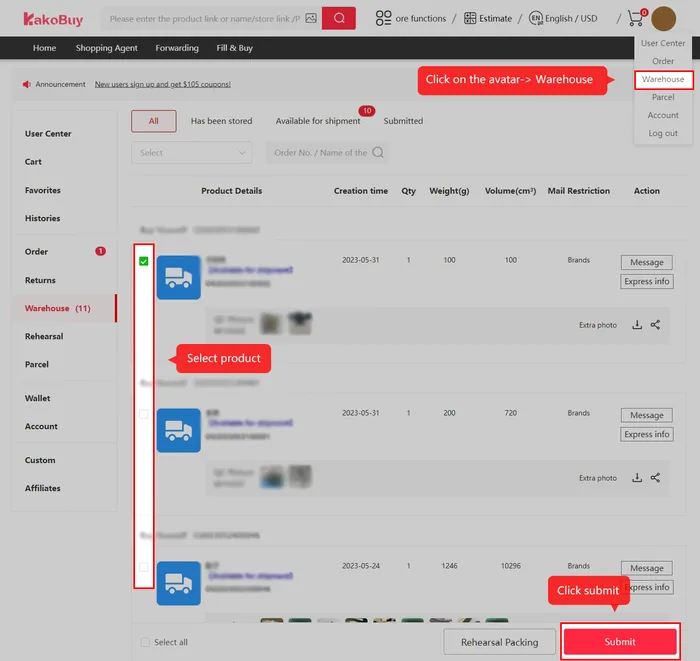
Once stored, each line shows Weight in grams and Volume in cubic centimetres, measured at intake. These intake figures help estimate freight; final packed dimensions and chargeable weight can differ, and the volumetric rules on the shipping page decide which of them bills.
The Mail Restriction column is the quiet one to read. It flags lines the logistics networks restrict: batteries, liquids, magnets. A restriction may narrow the routes or make shipping unavailable for that destination, which in practice moves the price.
Three mid-flight events and their Chinese
Literally: supplementary payment
On a real order: The seller changed the price after you paid, or shipping to the warehouse cost more than listed. Official refund terms note sellers usually collect the difference as a delivery fee.
If you misread it: Ask what changed, how much is due and which options remain. Verify the request inside the official order record before deciding whether to pay.
Literally: delisted
On a real order: Taken off the shelf. The official help centre explains some sellers do not update inventory in time, so the buying team may report goods out of sale while the listing still renders.
If you misread it: Do not reorder the same link hoping. Ask support to confirm with the seller; policy says they double-check stock.
Literally: exchange goods
On a real order: Changing a chosen variant after submitting. Before the seller ships, support contacts them and swaps it. After shipping, the swap waits until warehouse arrival, and return courier costs fall to you per the official amendment article.
If you misread it: Request a correction promptly and ask whether the seller has dispatched. Acceptance, freight and any service cost depend on the actual stage and reason.
These messages should be tied to the relevant order number. Read them in the official order record and ask support to confirm the requested action. An external message that uses the right Chinese word is not sufficient reason to send money or accept a different variant.
The short window after storage
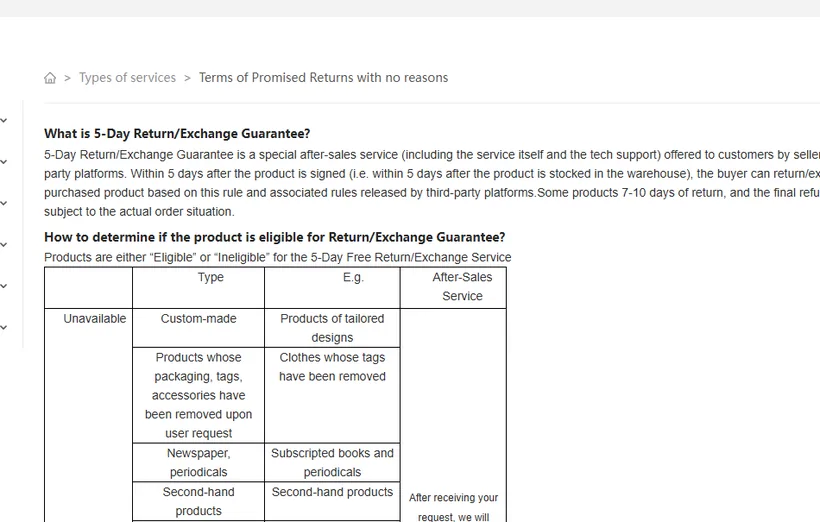
Storage is generous; the seller-side return custom is not. The 5-day return/exchange guarantee, where a listing supports it, runs from shortly after the item stocks in, and excludes custom pieces, hygiene categories, de-tagged garments and opened sealed goods. Five days against a hundred: inspect your QC photos the day they appear, not the week you ship.
The mechanics of requesting a return, and what the fee formula bills you, sit with the other help topics on the help page; the deadline is the part that belongs in your calendar.
Keep two dates, not one countdown
Record the actual in-storage date and the eligible return deadline separately. A long storage allowance does not preserve a short return right. Check item messages as well as the status label; the label describes a stage, not the reason for every delay.
A presale reply needs a date and a fallback
预售 means presale; 预计发货 means expected dispatch. Neither means the goods have already shipped. Keep the original promised date beside the latest message and ask whether it refers to seller dispatch or delivery to the warehouse.
A useful follow-up is 请确认这个规格预计哪天发货;如果延期,请先联系我。 “Please confirm when this specification is expected to dispatch; if it is delayed, contact me first.” Ask separately which cancellation or substitution options are available. Use the phrase guidance to keep the requested action explicit.